





How Coral Restoration Helped Prepare Humans for Space
As NASA prepares to return humans to the Moon through their Artemis II program, we reveal the fascinating ways in which Coral Restoration Foundation™ (CRF) has supported astronaut training in one of Earth’s most unexpected environments: coral reefs.
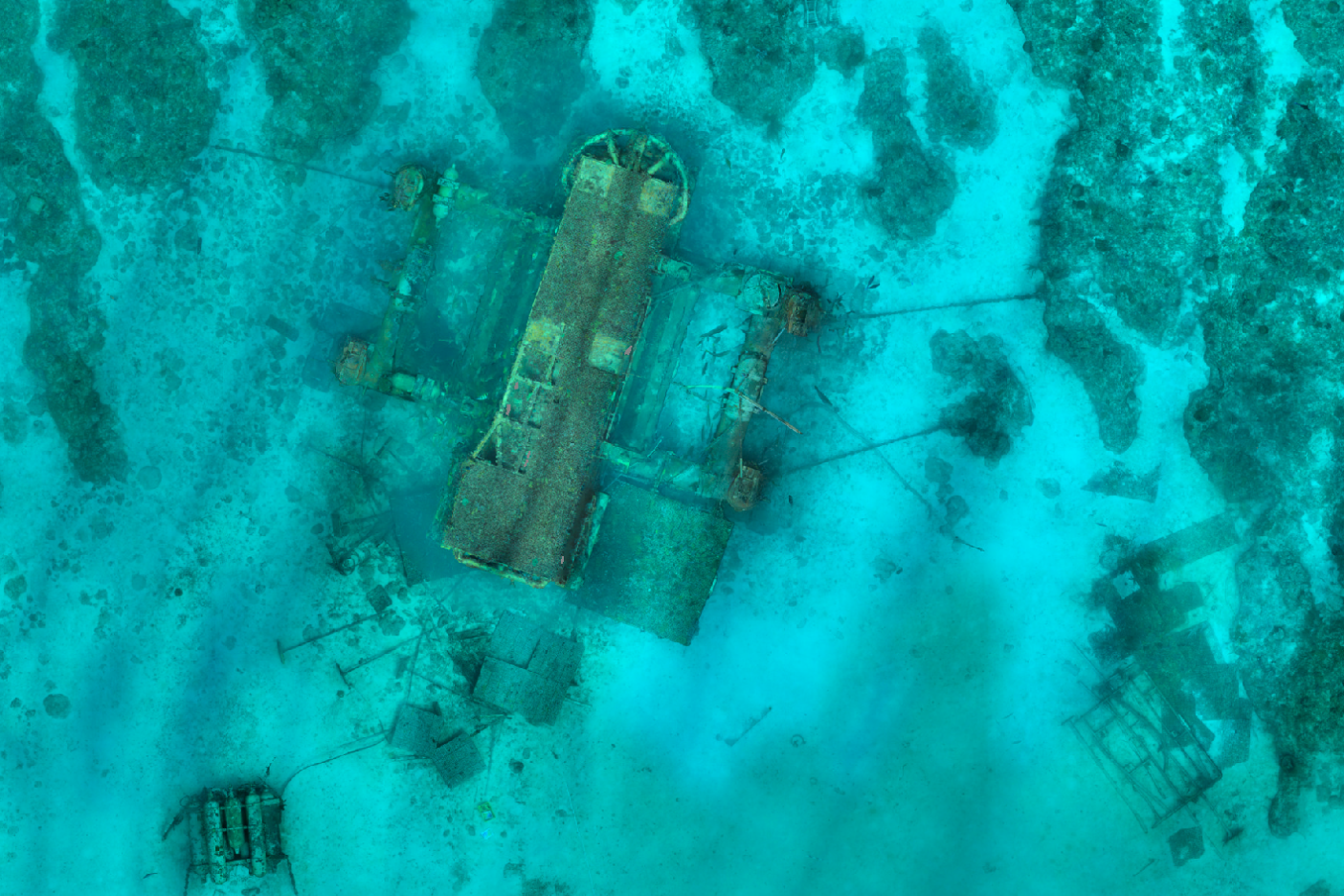
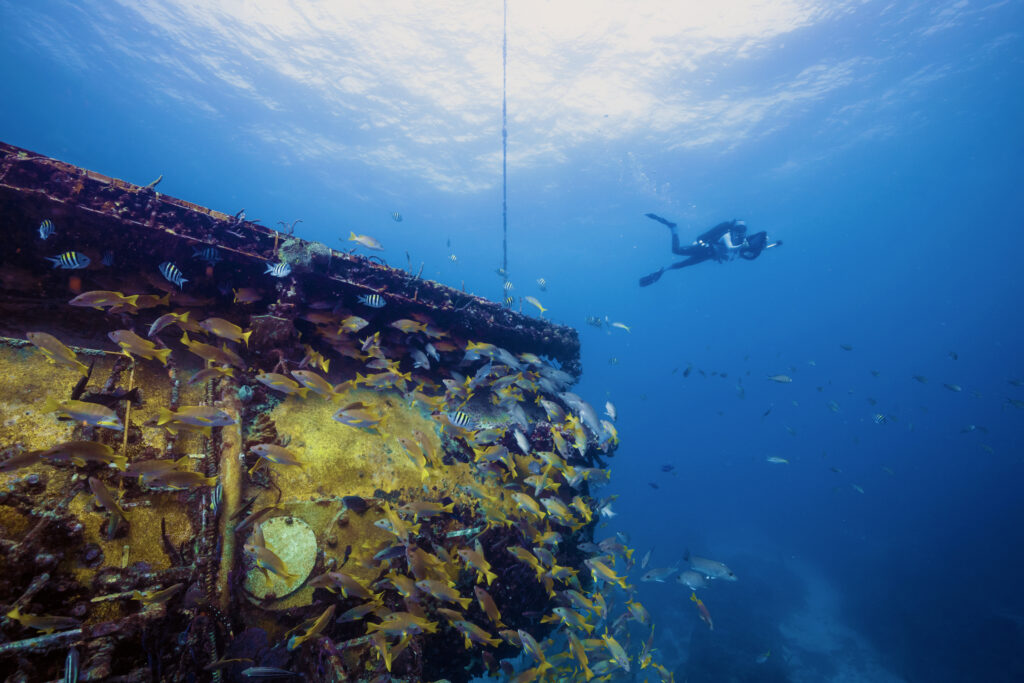
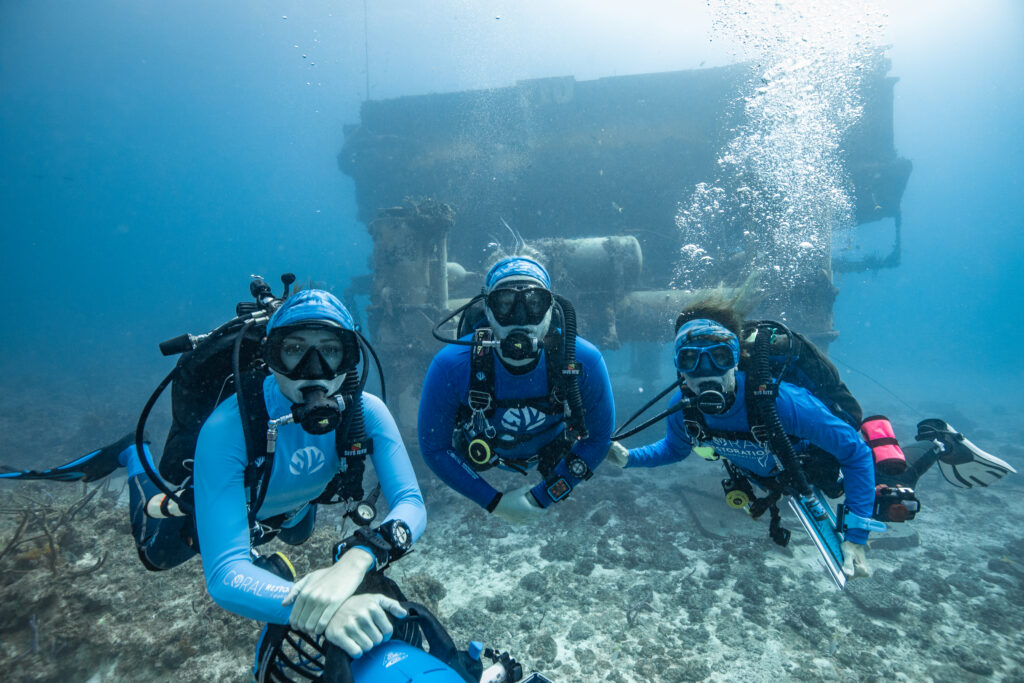
For years, at the Aquarius Reef Base in the Florida Keys, astronauts have lived and worked beneath the ocean’s surface as part of NASA Extreme Environment Mission Operations (NEEMO). The NEEMO program is designed to train astronauts for missions in space, simulating the conditions of spaceflight and preparing crews to work in extreme and hostile environments. These underwater missions test how crews navigate, move and carry out complex tasks in environments that mirror the isolation and constraints of exploring other worlds.
CRF Science Utilized by NASA Astronauts
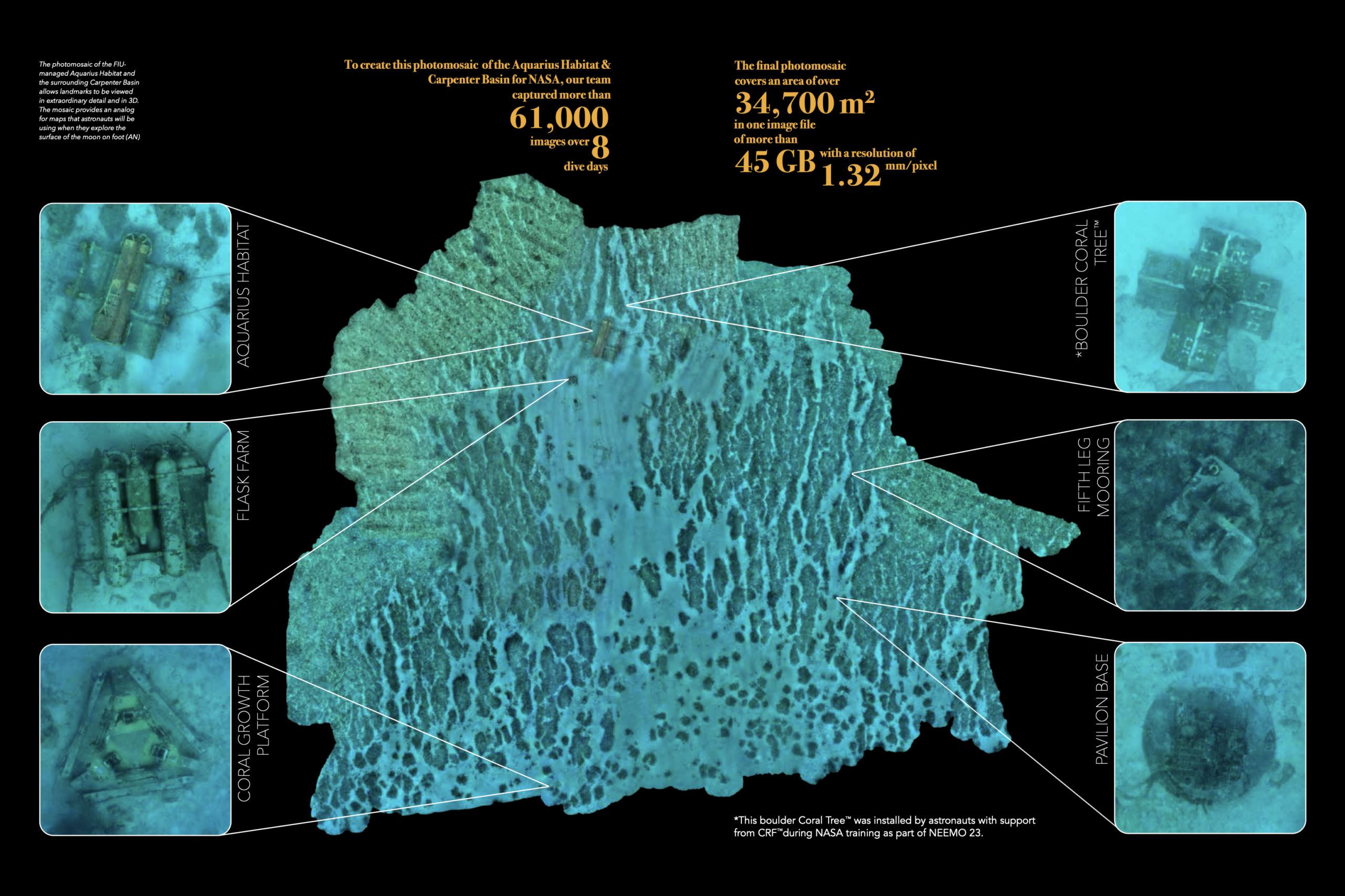
Over the years, CRF has contributed to this work through both technical innovation and hands-on training. In 2021, as NASA prepared for its next phase of human lunar exploration, the agency commissioned CRF to produce a high-resolution, three-dimensional photomosaic of the Aquarius habitat and surrounding seafloor. Built from more than 60,000 images captured over eight days of diving, the map spans nearly 35,000 square meters (roughly the size of five football fields) at millimeter-scale resolution. At that level of detail, even the smallest features of the habitat structure, down to the bolts that hold it together, can be clearly visualized in 3D. This extraordinary map created a precise environmental analog for how humans may navigate unfamiliar terrain beyond Earth.
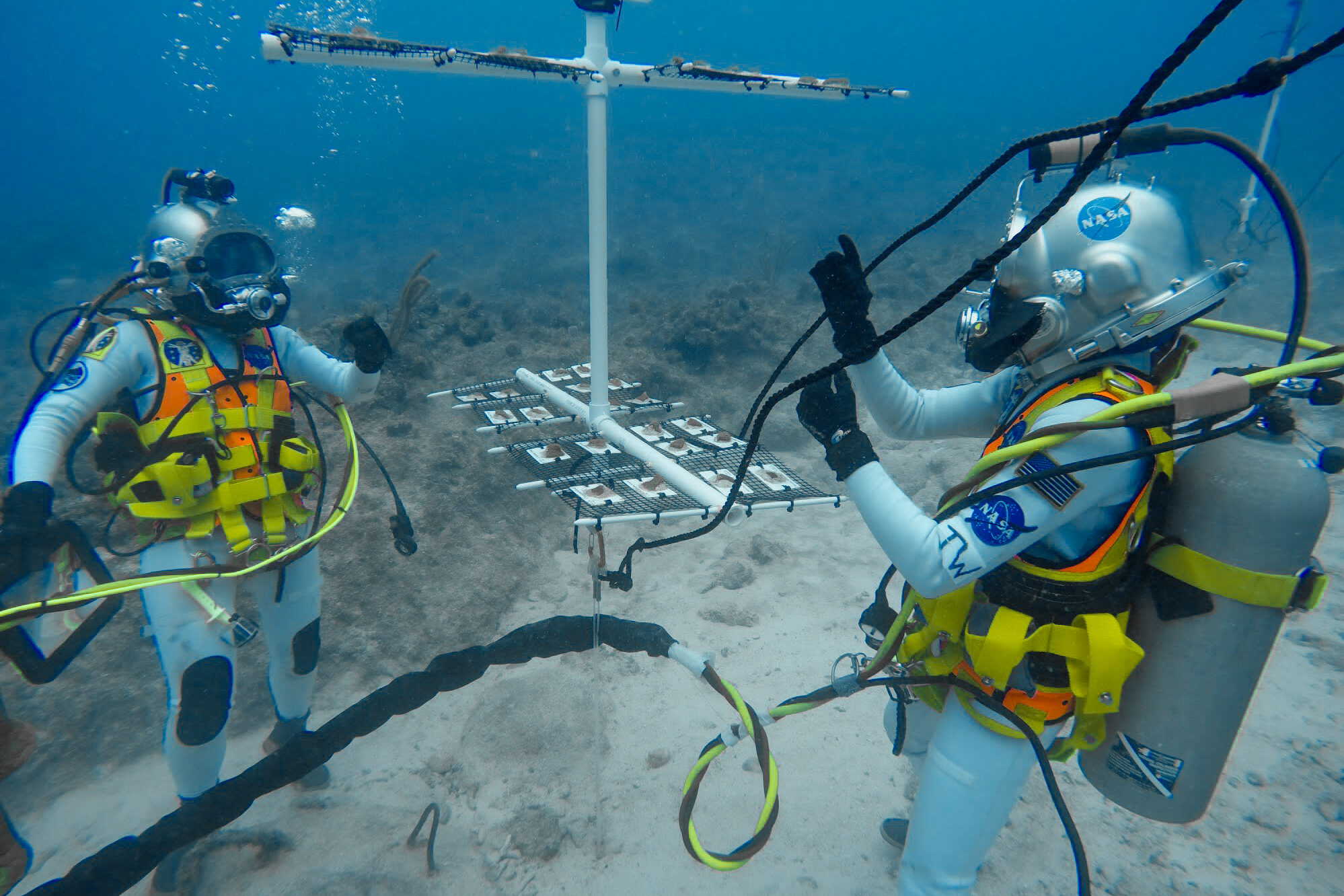
CRF collaboration with NASA has extended beyond mapping. During NEEMO 23 in 2019, CRF scientists trained astronauts to assemble and install boulder Coral Tree structures underwater. Working in full dive gear, the astronauts carried out the tasks step by step, handling tools, securing components and installing structures on the seafloor — mirroring the kind of fine motor skills, coordination and problem-solving required during spacewalks.
The Intersection of Ocean Science and Space Exploration
Together, this work highlights a growing overlap between ocean science and space exploration. Both demand precision, adaptability and the ability to operate safely in complex, high-risk environments where conditions are unfamiliar and unforgiving.
“The same processes we use to understand and restore coral reefs can also support how humans explore other extreme environments,” said Alex Neufeld, CRF Science Program Manager. “It’s a powerful reminder that solutions developed for the ocean can have applications far beyond it.”
As NASA advances the Artemis program, the role of Earth-based analog environments, and the science behind them, continues to shape how humans prepare for the next era of exploration beyond our planet.
Further Reading