




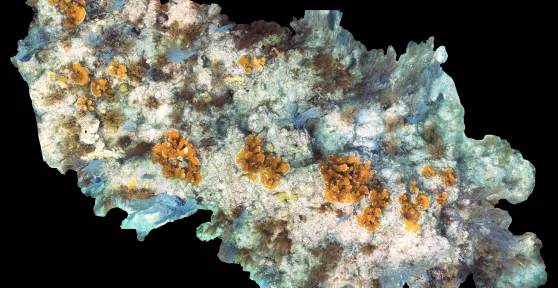
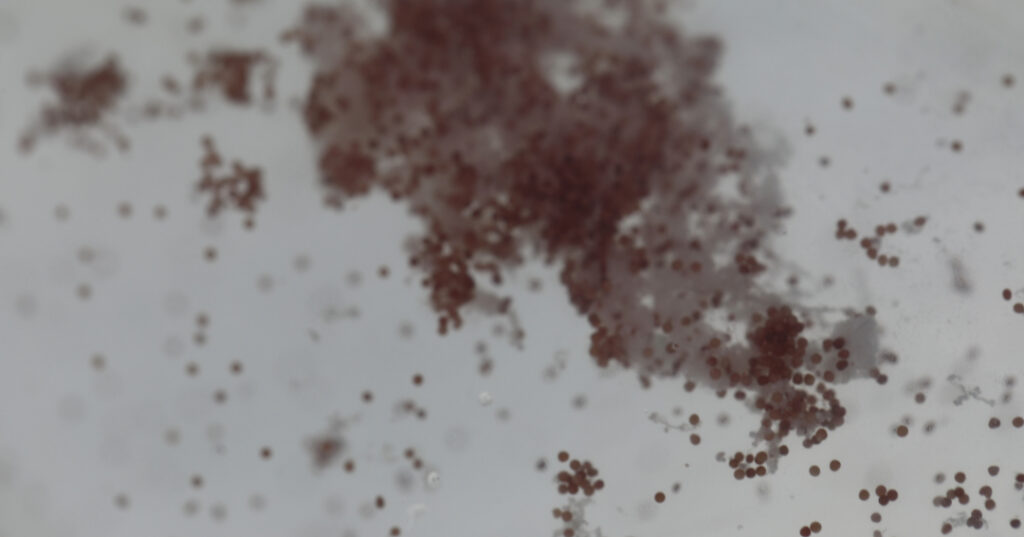
Coral Restoration Foundation™ (CRF) and the Florida Coral Rescue Center (FCRC), alongside key conservation collaborators, recently released approximately 200,000 grooved brain coral (Diploria labyrinthiformis) larvae into the wild near North Dry Rocks in the Upper Florida Keys. This activity represents a successful joint effort between public and private institutions working together to address the ongoing challenges facing Florida’s Coral Reef.
The larvae were collected at the FCRC facility in Orlando, where they spawned from corals originally rescued from Florida’s Coral Reef during the stony coral tissue loss disease (SCTLD) outbreak. After months of care and rearing by FCRC aquarists, the larvae were transported to CRF™ headquarters for release.
The site near North Dry Rocks was selected by CRF™ Science Program Manager Alex Neufeld based on prior observations of grooved brain coral survivorship and the presence of natural settlement cues.
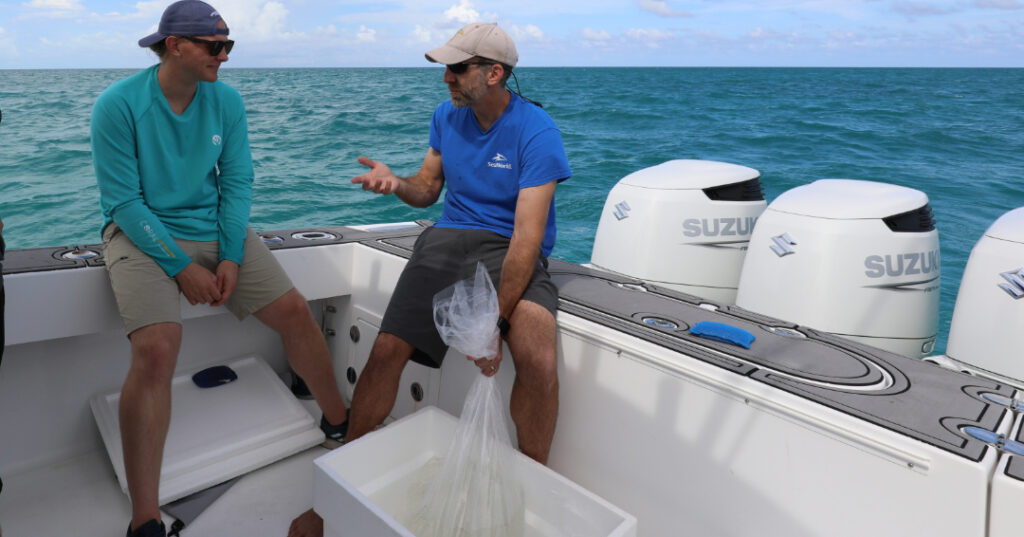
Photo: Jackson Harris for Coral Restoration Foundation™
This release was made possible thanks to the coordinated work of many organizations. SeaWorld, Disney Conservation, the Fish & Wildlife Foundation of Florida, the Association of Zoos & Aquariums (AZA), the Florida Fish and Wildlife Conservation Commission (FWC), and NOAA Fisheries all contributed resources, expertise, and support to advance this multi-step process.
“This is the kind of collaborative effort that strengthens the future of coral conservation,” said Phanor Montoya-Maya, CRF™ Restoration Program Manager. “For reef restoration to succeed, we must unite science, community, and shared expertise.”
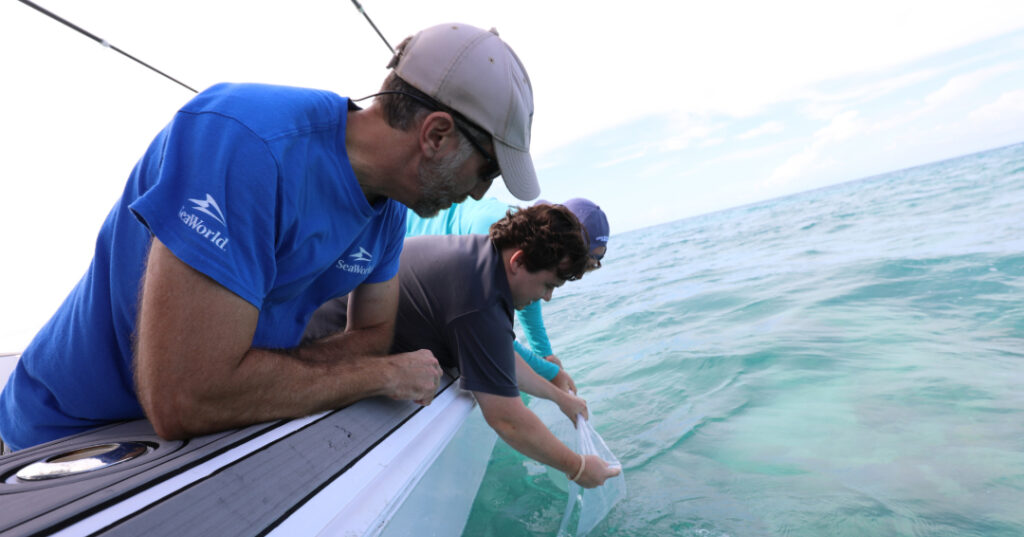
Photo: Jackson Harris for Coral Restoration Foundation™
This work highlights the value of collaboration across aquaria, field-based nonprofits, and government agencies, bringing together a wide range of skills and resources. As Florida’s Coral Reef continues to face the threats of disease, warming seas, and habitat loss, efforts like this are an example of how collective action can strengthen conservation impact.
CRF™ remains committed to advancing coral restoration through teamwork, science-based solutions, and shared commitment to protecting the reefs that support coastal ecosystems and communities.